
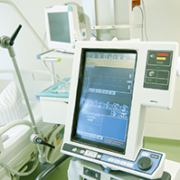
The very first intensive care units (ICUs), introduced towards the end of the 19th century, consisted of a few beds reserved for the sickest patients and put together in one area of the general hospital ward so that the patients could be watched more closely. Patients continued to be treated by their admitting physician with consultation by other specialists as dictated by the course of their disease. Later, separate rooms were created to gather together the special monitoring and organ support equipment and specially trained nursing and medical staff considered necessary for the optimal management of critically ill patients.
Over the years, especially in larger hospitals and more commonly in the United States than in other countries, subspecialty ICUs have developed, catering for specific groups of patients, such as those with neurological, respiratory, cardiac, surgical, trauma diagnoses. This division of intensive care into subspecialties reflects a general trend across medicine towards the creation of increasingly specialized subspecialties. In the United States, one third of all ICUs are now (sub)specialty units. But is there any evidence that such units provide better care than general, multidisciplinary ICUs catering for all critically ill patients regardless of diagnosis?
by Prof. Jean-Louis Vincent
Benefits of subspecialty ICUs
Proponents of specialized ICUs suggest that patient outcomes can be improved in such units because they are managed by staff with increased expertise and training in the particular field of diagnosis. Such units are thus able to provide more focused, relevant care. However, although highly trained in their particular specialty, staff in such units may be less experienced in diagnosing and managing other systemic complications of critical illness. There is relatively little data available comparing the benefits of specialty versus general ICUs. In one study, patients with intracerebral hemorrhage had improved survival rates when admitted to a specialized neurosurgical ICU compared to a general ICU [1]. However, in another analysis, admission to a diagnosis-appropriate specialty ICU was associated with no survival benefit compared to admission to a general ICU for a selection of common diagnoses, including acute coronary syndrome, ischemic stroke, intracranial hemorrhage, abdominal surgery, and coronary-artery bypass graft surgery [2]. Interestingly, admission to a diagnosis-inappropriate specialty ICU, e.g., a renal patient admitted to a neurosurgical ICU because the renal ICU was full, was associated with increased mortality rates [2]. Performing such comparative studies is, however, fraught with difficulty, largely because there is no set definition of a
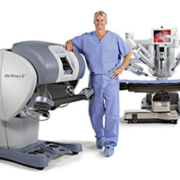
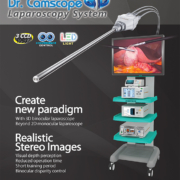
Computer-assisted surgery is steadily making inroads across the world, improving patient care and recovery as well as enabling hospitals to better control costs.
Robots would make ideal surgeons, says physician and researcher Catherine Mohr. They never tire and are always as precise as possible when it comes to performing complex procedures in the fields of urology, gynecology or oncology. And with surgical robots, humans are always in control, sitting at a console to guide the machine
In the days of film-on-a-lightbox, dose seemed easier to control. If you overexposed film, the image would turn black. It you underexposed, the image would be too light. These technical realities exercised subtle control over the range of dose that would produce a useable image. With the advent of digital imaging, those subtle nuances have changed.
Digital dose creep
Technologists soon learned that slight overexposure in digital imaging could create a better looking image. So there was a natural tendency for doses to slowly edge higher in the name of image quality. Add to this the steady increase of new types of modalities coming on line and the patient

The world of healthcare is changing. The prevalence of chronic diseases is increasing as our population is ageing, but there will be fewer taxpayers to maintain the current healthcare systems. We have increasing demand for expensive technologies, yet the number of healthcare professionals is decreasing. As an important step towards fostering the widespread adoption of eHealth throughout the EU, the European Commission adopted on December 6th, 2012 the eHealth Action Plan 2012-2020

The European Respiratory Society (ERS) published their first White Lung Book a decade ago, to provide a comprehensive survey of respiratory health across Europe for the benefit of patients as well as medical personnel and policy makers. The book aimed to highlight the huge and underestimated burden of respiratory disease in the region. Since then political and economic upheavals as well as an expansion in medical research and development have necessitated a second edition of this invaluable book, which was published ahead of this year

Medicine is undergoing a historic transition, moving away from a trial-and-error model of care, towards individualized treatment strategies based on patient-specific knowledge management of disease and treatment. Not only the biomedical systems sciences and engineering, mathematics, medical imaging and medical informatics but also the discipline of machine intelligence and in a wider sense computer assisted radiology and surgery (CARS) are enablers of this new paradigm. With an appropriate ICT platform, for example, medical workstations for domain-specific applications, they provide the methods and tools for knowledge management and specifically for a patient-specific medicine.
Important aspects of these dramatically evolving and ICT based methodologies and tools are possibilities for:
With an appropriate employment of these methods and tools, they become enablers of intelligent infrastructures and processes in medical diagnosis and therapy, hopefully making complex situations and processes in healthcare more comprehensible, visible, reproducible, transparent and understandable for the human, i.e. for the physician and patient……
Download white paper to continue reading


Prins Hendrikstraat 1
5611HH Eindhoven
The Netherlands
info@interhospi.com
PanGlobal Media IS not responsible for any error or omission that might occur in the electronic display of product or company data.