• News
    • Featured Articles
    • Product News
    • E-News
  • Magazine
    • About us
    • Digital edition
    • Archived issues
    • Media kit
    • Submit Press Release
  • White Papers
  • Events
  • Suppliers
  • E-Alert
  • Contact us
  • FREE newsletter subscription
  • Search
  • Menu Menu
International Hospital
  • AI
  • Cardiology
  • Oncology
  • Neurology
  • Genetics
  • Orthopaedics
  • Research
  • Surgery
  • Innovation
  • Medical Imaging
  • MedTech
  • Obs-Gyn
  • Paediatrics

Archive for category: Featured Articles

Featured Articles

Intensive care units: specialized or multidisciplinary?

, 26 August 2020/in Featured Articles /by 3wmedia

The very first intensive care units (ICUs), introduced towards the end of the 19th century, consisted of a few beds reserved for the sickest patients and put together in one area of the general hospital ward so that the patients could be watched more closely. Patients continued to be treated by their admitting physician with consultation by other specialists as dictated by the course of their disease. Later, separate rooms were created to gather together the special monitoring and organ support equipment and specially trained nursing and medical staff considered necessary for the optimal management of critically ill patients.
Over the years, especially in larger hospitals and more commonly in the United States than in other countries, subspecialty ICUs have developed, catering for specific groups of patients, such as those with neurological, respiratory, cardiac, surgical, trauma diagnoses. This division of intensive care into subspecialties reflects a general trend across medicine towards the creation of increasingly specialized subspecialties. In the United States, one third of all ICUs are now (sub)specialty units. But is there any evidence that such units provide better care than general, multidisciplinary ICUs catering for all critically ill patients regardless of diagnosis?

by Prof. Jean-Louis Vincent

Benefits of subspecialty ICUs
Proponents of specialized ICUs suggest that patient outcomes can be improved in such units because they are managed by staff with increased expertise and training in the particular field of diagnosis. Such units are thus able to provide more focused, relevant care. However, although highly trained in their particular specialty, staff in such units may be less experienced in diagnosing and managing other systemic complications of critical illness. There is relatively little data available comparing the benefits of specialty versus general ICUs. In one study, patients with intracerebral hemorrhage had improved survival rates when admitted to a specialized neurosurgical ICU compared to a general ICU [1]. However, in another analysis, admission to a diagnosis-appropriate specialty ICU was associated with no survival benefit compared to admission to a general ICU for a selection of common diagnoses, including acute coronary syndrome, ischemic stroke, intracranial hemorrhage, abdominal surgery, and coronary-artery bypass graft surgery [2]. Interestingly, admission to a diagnosis-inappropriate specialty ICU, e.g., a renal patient admitted to a neurosurgical ICU because the renal ICU was full, was associated with increased mortality rates [2]. Performing such comparative studies is, however, fraught with difficulty, largely because there is no set definition of a
https://interhospi.com/wp-content/uploads/sites/3/2020/08/IH316_JLV_dreamstime_m_27715921.jpg 300 199 3wmedia https://interhospi.com/wp-content/uploads/sites/3/2020/06/Component-6-–-1.png 3wmedia2020-08-26 14:21:112021-01-08 12:32:24Intensive care units: specialized or multidisciplinary?

Life-saving robots on the rise

, 26 August 2020/in Featured Articles /by 3wmedia

Computer-assisted surgery is steadily making inroads across the world, improving patient care and recovery as well as enabling hospitals to better control costs.

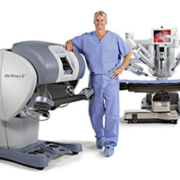
Robots would make ideal surgeons, says physician and researcher Catherine Mohr. They never tire and are always as precise as possible when it comes to performing complex procedures in the fields of urology, gynecology or oncology. And with surgical robots, humans are always in control, sitting at a console to guide the machine

https://interhospi.com/wp-content/uploads/sites/3/2020/08/IH89a_dvs_hd_surgeon450.jpg 201 300 3wmedia https://interhospi.com/wp-content/uploads/sites/3/2020/06/Component-6-–-1.png 3wmedia2020-08-26 14:21:112021-01-08 12:32:29Life-saving robots on the rise

Dr. Camscope – top class 3D laparoscope system

, 26 August 2020/in Featured Articles /by 3wmedia
https://interhospi.com/wp-content/uploads/sites/3/2020/08/46254a_IHE2_Sometech_1.jpg 1000 694 3wmedia https://interhospi.com/wp-content/uploads/sites/3/2020/06/Component-6-–-1.png 3wmedia2020-08-26 14:21:112021-01-08 12:32:33Dr. Camscope – top class 3D laparoscope system

The right dose of expertise: How Agfa HealthCare is helping stakeholders balance ?imaging gently? with quality imaging

, 26 August 2020/in Featured Articles /by 3wmedia

In the days of film-on-a-lightbox, dose seemed easier to control. If you overexposed film, the image would turn black. It you underexposed, the image would be too light. These technical realities exercised subtle control over the range of dose that would produce a useable image. With the advent of digital imaging, those subtle nuances have changed.

Digital dose creep
Technologists soon learned that slight overexposure in digital imaging could create a better looking image. So there was a natural tendency for doses to slowly edge higher in the name of image quality. Add to this the steady increase of new types of modalities coming on line and the patient

https://interhospi.com/wp-content/uploads/sites/3/2020/08/IH76b_Agfa_Rawa.jpg 236 300 3wmedia https://interhospi.com/wp-content/uploads/sites/3/2020/06/Component-6-–-1.png 3wmedia2020-08-26 14:21:112021-01-08 12:32:36The right dose of expertise: How Agfa HealthCare is helping stakeholders balance ?imaging gently? with quality imaging

The eHealth Action Plan: innovative healthcare for the 21st century

, 26 August 2020/in Featured Articles /by 3wmedia

The world of healthcare is changing. The prevalence of chronic diseases is increasing as our population is ageing, but there will be fewer taxpayers to maintain the current healthcare systems. We have increasing demand for expensive technologies, yet the number of healthcare professionals is decreasing. As an important step towards fostering the widespread adoption of eHealth throughout the EU, the European Commission adopted on December 6th, 2012 the eHealth Action Plan 2012-2020

https://interhospi.com/wp-content/uploads/sites/3/2020/08/IH69a_PaulTimmers.jpg 392 300 3wmedia https://interhospi.com/wp-content/uploads/sites/3/2020/06/Component-6-–-1.png 3wmedia2020-08-26 14:21:112021-01-08 12:32:43The eHealth Action Plan: innovative healthcare for the 21st century

A Step Closer: The first thing of innovation is listening

, 26 August 2020/in Featured Articles /by 3wmedia
https://interhospi.com/wp-content/uploads/sites/3/2020/08/46277-IHE_1310_MINDRAY.jpg 983 700 3wmedia https://interhospi.com/wp-content/uploads/sites/3/2020/06/Component-6-–-1.png 3wmedia2020-08-26 14:21:112021-01-08 12:32:19A Step Closer: The first thing of innovation is listening

The ?European Lung White Book? and respiratory intensive care

, 26 August 2020/in Featured Articles /by 3wmedia

The European Respiratory Society (ERS) published their first White Lung Book a decade ago, to provide a comprehensive survey of respiratory health across Europe for the benefit of patients as well as medical personnel and policy makers. The book aimed to highlight the huge and underestimated burden of respiratory disease in the region. Since then political and economic upheavals as well as an expansion in medical research and development have necessitated a second edition of this invaluable book, which was published ahead of this year

https://interhospi.com/wp-content/uploads/sites/3/2020/08/Frances1_08.jpg 300 225 3wmedia https://interhospi.com/wp-content/uploads/sites/3/2020/06/Component-6-–-1.png 3wmedia2020-08-26 14:21:112021-01-08 12:32:24The ?European Lung White Book? and respiratory intensive care

Machine intelligence in the OR: optimizing the effectiveness of surgeons with IT tools

, 26 August 2020/in Featured Articles /by 3wmedia

Medicine is undergoing a historic transition, moving away from a trial-and-error model of care, towards individualized treatment strategies based on patient-specific knowledge management of disease and treatment. Not only the biomedical systems sciences and engineering, mathematics, medical imaging and medical informatics but also the discipline of machine intelligence and in a wider sense computer assisted radiology and surgery (CARS) are enablers of this new paradigm. With an appropriate ICT platform, for example, medical workstations for domain-specific applications, they provide the methods and tools for knowledge management and specifically for a patient-specific medicine.

Important aspects of these dramatically evolving and ICT based methodologies and tools are possibilities for:

  1. Modelling of human organ systems, pathologies and clinical processes from scientifically based evidence, medical guidelines and data mining.
  2. Analysis (e.g. inferencing) and adaptation (e.g. domain-specific learning) of models from data and information gathered from specific patients through imaging and biosensors in order to generate knowledge models of patient-specific situations to improve accuracy of diagnosis and appropriateness of treatment processes.
  3. Higher quality of therapeutic interventions by means of real time integration of information in patient-specific models and therapeutic processes through computer assisted workflow, knowledge and decision management

With an appropriate employment of these methods and tools, they become enablers of intelligent infrastructures and processes in medical diagnosis and therapy, hopefully making complex situations and processes in healthcare more comprehensible, visible, reproducible, transparent and understandable for the human, i.e. for the physician and patient……

Download white paper to continue reading

https://interhospi.com/wp-content/uploads/sites/3/2020/08/IH88a_Lemke.jpg 650 500 3wmedia https://interhospi.com/wp-content/uploads/sites/3/2020/06/Component-6-–-1.png 3wmedia2020-08-26 14:21:112021-01-08 12:32:29Machine intelligence in the OR: optimizing the effectiveness of surgeons with IT tools

We’d like to introduce you to our new baby. The new DRX 2530C detector

, 26 August 2020/in Featured Articles /by 3wmedia
https://interhospi.com/wp-content/uploads/sites/3/2020/08/46289_carestream.jpg 991 700 3wmedia https://interhospi.com/wp-content/uploads/sites/3/2020/06/Component-6-–-1.png 3wmedia2020-08-26 14:21:112021-01-08 12:32:33We’d like to introduce you to our new baby. The new DRX 2530C detector

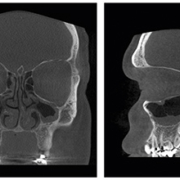
A new, large field of view Cone Beam system for head & neck imaging is in clinical validation use at Tampere University Hospital

, 26 August 2020/in Featured Articles /by 3wmedia

The SCANORA

https://interhospi.com/wp-content/uploads/sites/3/2020/08/IH77_Case1.jpg 220 400 3wmedia https://interhospi.com/wp-content/uploads/sites/3/2020/06/Component-6-–-1.png 3wmedia2020-08-26 14:21:112021-01-08 12:32:37A new, large field of view Cone Beam system for head & neck imaging is in clinical validation use at Tampere University Hospital
Page 49 of 103«‹4748495051›»

Latest issue of International Hospital

April 2024

2 June 2026

DeepHealth achieves multiple regulatory milestones for Neuro, Prostate and LumbarMR

7 January 2026

Gulf Aorta Summit 2026 Returns to Dubai with a Global Lineup of Aortic Experts

17 December 2025

GE HealthCare receives CE mark for 128cm total body PET/CT

Digital edition
All articles Archived issues

Free subscription

View more product news

Get our e-alert

The medical devices information portal connecting healthcare professionals to global vendors

Sign in for our newsletter
  • News
    • Featured Articles
    • Product News
    • E-News
  • Magazine
    • About us
    • Archived issues
    • Media kit
    • Submit Press Release

Prins Hendrikstraat 1
5611HH Eindhoven
The Netherlands
info@interhospi.com

PanGlobal Media IS not responsible for any error or omission that might occur in the electronic display of product or company data.

Scroll to top

This site uses cookies. By continuing to browse the site, you are agreeing to our use of cookies.

Accept settingsHide notification onlyCookie settings

Cookie and Privacy Settings


How we use cookies

We may ask you to place cookies on your device. We use cookies to let us know when you visit our websites, how you interact with us, to enrich your user experience and to customise your relationship with our website.

Click on the different sections for more information. You can also change some of your preferences. Please note that blocking some types of cookies may affect your experience on our websites and the services we can provide.

Essential Website Cookies

These cookies are strictly necessary to provide you with services available through our website and to use some of its features.

Because these cookies are strictly necessary to provide the website, refusing them will affect the functioning of our site. You can always block or delete cookies by changing your browser settings and block all cookies on this website forcibly. But this will always ask you to accept/refuse cookies when you visit our site again.

We fully respect if you want to refuse cookies, but to avoid asking you each time again to kindly allow us to store a cookie for that purpose. You are always free to unsubscribe or other cookies to get a better experience. If you refuse cookies, we will delete all cookies set in our domain.

We provide you with a list of cookies stored on your computer in our domain, so that you can check what we have stored. For security reasons, we cannot display or modify cookies from other domains. You can check these in your browser's security settings.

.

Google Analytics Cookies

These cookies collect information that is used in aggregate form to help us understand how our website is used or how effective our marketing campaigns are, or to help us customise our website and application for you to improve your experience.

If you do not want us to track your visit to our site, you can disable this in your browser here:

.

Other external services

We also use various external services such as Google Webfonts, Google Maps and external video providers. Since these providers may collect personal data such as your IP address, you can block them here. Please note that this may significantly reduce the functionality and appearance of our site. Changes will only be effective once you reload the page

Google Webfont Settings:

Google Maps Settings:

Google reCaptcha settings:

Vimeo and Youtube videos embedding:

.

Privacy Beleid

U kunt meer lezen over onze cookies en privacy-instellingen op onze Privacybeleid-pagina.

Privacy policy
Accept settingsHide notification only

Sign in for our newsletter

Free subscription