
• News
    • Featured Articles
    • Product News
    • E-News
  • Magazine
    • About us
    • Digital edition
    • Archived issues
    • Media kit
    • Submit Press Release
  • White Papers
  • Events
  • Suppliers
  • E-Alert
  • Contact us
  • FREE newsletter subscription
  • Search
  • Menu Menu
International Hospital
  • AI
  • Cardiology
  • Oncology
  • Neurology
  • Genetics
  • Orthopaedics
  • Research
  • Surgery
  • Innovation
  • Medical Imaging
  • MedTech
  • Obs-Gyn
  • Paediatrics

Archive for category: Featured Articles

Featured Articles

IHF Oslo 2013: the 38th World Hospital Congress

, 26 August 2020/in Featured Articles /by 3wmedia

The World Hospital Congress is an initiative of the International Hospital Federation (IHF), re-established in 1947 and based in Geneva.  IHF is an international non-governmental organization supported by members from over 100 countries.  Last June, the 38th edition  was held in Oslo, Norway and the Norwegian Hospital and Health Services Association (NSH), a member of IHF, was involved in the organization of the 3-day event.  
International Hospital talked to Dr Bernadette Kumar, NSH board member and president of the International Scientific Committee piloting the conference programme, about the scope of this important meeting for hospitals around the world.
 

Q. The 38th World Hospital Congress was successful in attracting a large number of delegates as well as high level speakers such as Dr Margaret Chan, WHO Director. As member of the Norwegian Organizing Committee and President of the Scientific Committee, can you tell us about the main challenges of putting together an event of such scope? Are there any pitfalls to be avoided?
 
The first key lesson is that there are never any shortcuts to success; it takes a lot of hard work, time and effort not only of an individual or key persons but a good team in putting together a good programme. Norway as a country has been known to box in a class higher than its own and it is this spirit of aiming high and for the best that secured high level speakers such as Dr. Chan. To quote one of the participants based on the evaluation, the Plenary sessions were outstanding!
 
Oslo 2013 clearly reflects the handiwork of a highly competent and dedicated team. Teamwork required both resilience and persistence; never giving up despite disappointments, shortcomings and even though the process could be both time consuming and tedious.
 
It is an extremely daunting task to satisfy and meet the needs of such a multidisciplinary global audience. Thus the main challenge of putting together such an event is striking the balance, the programme has to be relevant and interesting for a board range of subjects and a multidisciplinary audience.  The programme has to cater for wide participation and in meeting the needs of all there is a danger of spreading the programme too thin. There has to be something for everybody but not everything on the programme will appeal to all participants. So the pitfall to be avoided is a highly specialized programme, but at the same time if it is too general it will not generate sufficient interest or satisfy the needs.
 
Q. One of the important themes discussed was the role of technology and innovation in improving the delivery and effectiveness of healthcare. There seems to have been varied and sometimes contrasting views on this key issue, could you briefly touch upon the most important points that were made? Is there a take home message on this essential question?
 
We live in the age of technology and healthcare is no island. Technology and innovation have serious implications for future healthcare. Technology has consequences for healthcare and despite the difference in viewpoints one thing is certain; that  it cannot be ignored. Oslo 2013 provided a platform that shed light on the consequences of technology for healthcare, the challenges and ethical dilemmas technology poses. Furthermore, the positive results were shared and discussed and last but not the least the sharing of experiences from around the around the globe and learning from one another enhanced the air of optimism. The participants appreciated the possibility to gain insight as to the state of the art from both the North and South. The North South dichotomy is well known and notwithstanding the great variation in resources there are similarities especially with regards to the challenges. Dr. Margaret Chan said
https://interhospi.com/wp-content/uploads/sites/3/2020/08/IH335_IHFOslo_pic-interviewee.jpg 300 224 3wmedia https://interhospi.com/wp-content/uploads/sites/3/2020/06/Component-6-–-1.png 3wmedia2020-08-26 14:21:112021-01-08 12:32:23IHF Oslo 2013: the 38th World Hospital Congress

The coming of age of intravascular ultrasound

, 26 August 2020/in Featured Articles /by 3wmedia

Intravascular Ultrasound (IVUS) provides images of the insides of blood vessels for the diagnosis and treatment of cardiovascular disease. Although the roots of IVUS date back a quarter century, it is only recently that physicians have begun to take serious cognizance of its potential.

Improving PCI outcomes
The growth in interest in IVUS is being driven by changes in the way for treating acute coronary syndrome (ACS). ACS is a common complication of coronary heart disease, which is the leading cause of death in industrialized countries.

The typical approach to treat ACS consists of percutaneous coronary intervention (PCI): catheter angiography, balloon angioplasty and the use of stents. However, the proponents of IVUS have been making a strong case about its utility to improve PCI outcomes, including those offered by the latest generation of drug-eluting stents (DES).

IVUS consists of a miniaturized ultrasound imaging device. This is mounted on a catheter which is threaded across an artery to provide both cross-sectional and longitudinal views. It thus reveals not only the shape and amount of plaque but the deployment and expansion of a stent, too. Such information is not accessible via standard angiography. The main area for application is coronary arteries. Growing (if still far smaller) areas consist of peripheral arteries as well as intra-cardiac imaging.

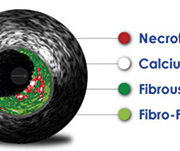
State-of-the-art IVUS systems use spectral backscatter and frequency analysis to classify plaque (distribution, burden and calcification) and are claimed to achieve up to 97% accuracy. They are also used to plan for treatment with stents

https://interhospi.com/wp-content/uploads/sites/3/2020/08/IH303a.jpg 151 300 3wmedia https://interhospi.com/wp-content/uploads/sites/3/2020/06/Component-6-–-1.png 3wmedia2020-08-26 14:21:112021-01-08 12:32:28The coming of age of intravascular ultrasound

Respiratory valves and other innovative respiratory products

, 26 August 2020/in Featured Articles /by 3wmedia
https://interhospi.com/wp-content/uploads/sites/3/2020/08/46356_691591-A-02-12_FullProductLineAdvertisement_QtrPageRT.jpg 1000 692 3wmedia https://interhospi.com/wp-content/uploads/sites/3/2020/06/Component-6-–-1.png 3wmedia2020-08-26 14:21:112021-01-08 12:32:31Respiratory valves and other innovative respiratory products

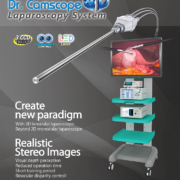
Dr. Camscope 3D laparascopy system

, 26 August 2020/in Featured Articles /by 3wmedia
https://interhospi.com/wp-content/uploads/sites/3/2020/08/46252a_IHE_Sometech_1.jpg 988 700 3wmedia https://interhospi.com/wp-content/uploads/sites/3/2020/06/Component-6-–-1.png 3wmedia2020-08-26 14:21:112021-01-08 12:32:35Dr. Camscope 3D laparascopy system

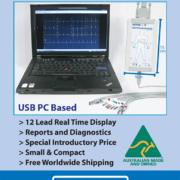
Distributors wanted. Australian made ECG.

, 26 August 2020/in Featured Articles /by 3wmedia
https://interhospi.com/wp-content/uploads/sites/3/2020/08/46218_46217_November-2012.jpg 1000 700 3wmedia https://interhospi.com/wp-content/uploads/sites/3/2020/06/Component-6-–-1.png 3wmedia2020-08-26 14:21:112021-01-08 12:32:39Distributors wanted. Australian made ECG.

Using joined-up data to transform healthcare services

, 26 August 2020/in Featured Articles /by 3wmedia

Data sharing between healthcare organizations can improve clinical efficiency and enable better decision-making. This is essential at a time when health services in Europe are facing perhaps their greatest challenge to date. Providers must accommodate increasing demand for services due to ageing populations, the rising prevalence of chronic diseases and budgets being constrained. The ability to compare costs to benchmarks will be crucial for healthcare providers needing to maintain or improve standards of care and achieve cost reductions and efficiency targets without cutting frontline staff. However, it will be necessary to look at key performance indicators (KPIs) more from a clinical achievement perspective than an operational cost or activity-based perspective. Data collection and dissemination will also be central to achieving these aims, as hospitals and providers adopt a more collaborative and integrated approach to healthcare.

by Peter Osborne

Growth in healthcare spending per capita has slowed or fallen sharply in real terms in almost all European countries since 2010 [see Figure 1]. Previous to the economic crisis, it had been rising faster than the rest of the economy, according to the European Commission (EC) and Organization for Economic Co-operation and Development (OECD).

As a result, there is a pressing need to change the way healthcare services are commissioned and delivered. Although national health systems in Europe are diverse, with models varying from predominantly single payer health services, to systems of competing insurers and providers, there is a growing recognition that advanced analytics employed at every point of care will play a key role in advising on how to move forward.

According to analysts at Frost & Sullivan, hospitals and other healthcare providers will need to invest in advanced data analytics solutions to monitor end-to-end care delivery across a variety of settings, as well as provide comprehensive reporting on performance and quality measures to a variety of stakeholders.

Up until recently however, the healthcare sector has suffered from disjointed approaches to collecting data, with highly-fragmented systems used by various payers, providers, and government agencies. Furthermore, many have yet to adopt any form of analytical approach to the clinical, financial and administrative data they collate.

A recent Accenture survey of 3,700 physicians across eight countries globally found that the main barriers to health information exchange were: IT systems that are unable to

https://interhospi.com/wp-content/uploads/sites/3/2020/08/IH318_new-IT-article_pic2.jpg 201 300 3wmedia https://interhospi.com/wp-content/uploads/sites/3/2020/06/Component-6-–-1.png 3wmedia2020-08-26 14:21:112021-01-08 12:32:23Using joined-up data to transform healthcare services

Cardiovascular disease: the need for more R&D in Europe

, 26 August 2020/in Featured Articles /by 3wmedia

Although cardiovascular disease, predominantly coronary heart disease (CHD) and stroke, is still the leading cause of mortality in Europe (around 47% of deaths), deaths from CHD have more than halved since the 1980s. There have been steady reductions in mortality from the disease in both genders and in most European countries, largely due to tests that allow timely diagnosis, as well as treatment with the new anti-thrombotic drugs. The major concern now, though, is that this steady reduction in mortality is beginning to plateau in many EU countries, particularly in younger people, and even more alarming is that an actual rise in mortality has recently been demonstrated in populations in Romanian, Greece and Lithuania. The danger is that such increases will be sustained and will begin to occur in other European countries, fuelled by the diabetes and obesity

https://interhospi.com/wp-content/uploads/sites/3/2020/08/Frances1_07.jpg 300 225 3wmedia https://interhospi.com/wp-content/uploads/sites/3/2020/06/Component-6-–-1.png 3wmedia2020-08-26 14:21:112021-01-08 12:32:28Cardiovascular disease: the need for more R&D in Europe

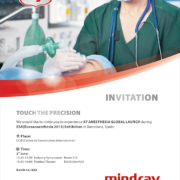
A7 Anesthesia Global Launch

, 26 August 2020/in Featured Articles /by 3wmedia
https://interhospi.com/wp-content/uploads/sites/3/2020/08/46276_IHE_13MayJun_Mindray-new.jpg 990 700 3wmedia https://interhospi.com/wp-content/uploads/sites/3/2020/06/Component-6-–-1.png 3wmedia2020-08-26 14:21:112021-01-08 12:32:32A7 Anesthesia Global Launch

Book review: Critical Care Ultrasound Manual

, 26 August 2020/in Featured Articles /by 3wmedia
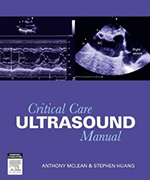
By Anthony McLean and Stephen Huang Churchill Livingstone, October 2012, 208 pp, e74

This is a concise step-by-step guide on the assessment of ultrasounds. Its aim is to  train critical care physicians in applying Rapid Assessment by Cardiac Echo (RACE) and Focused Assessment with Sonography in Trauma (FAST) to sonography principles. The focus is on helping readers to obtain rapid practical information to assist management decisions. The user-friendly layout is further enhanced by explanatory diagrams and ultrasound images which help with the learning experience. Also included is a DVD showing video clips of procedures cross-referenced in the book assisting the reader in comprehending the content covered in the manual. Practical tips and cautions stand out in highlighted boxes. Multiple choice questions at the end of each chapter allow readers to analyse what they have learnt. The appendices provide a checklist to assist interpretation of transthoracic echocardiogram in a systematic way. A chapter on Doppler principles help those who wish to prepare the way for Doppler measurements.

ELSEVIERwww.elsevier.com

https://interhospi.com/wp-content/uploads/sites/3/2020/08/BR_01.jpg 184 150 3wmedia https://interhospi.com/wp-content/uploads/sites/3/2020/06/Component-6-–-1.png 3wmedia2020-08-26 14:21:112021-01-08 12:32:35Book review: Critical Care Ultrasound Manual

Digital tomosynthesis at a glance: a scientific review

, 26 August 2020/in Featured Articles /by 3wmedia

X-ray based  imaging techniques  include a  variety of different implementations and applications:  computed radiography (CR), digital radiography (DR) and variations of computed tomography (CT): clinical CT, C-arm, tomosynthesis, micro-CT, industrial CT.  These X-ray based methods are widely used not only for diagnostics and assistance in clinical practice but also for screening in security applications and for non-destructive material testing in industry, archeology and material science. The aim of this review paper is to give an introduction into a modern  X-ray based tomographic imaging  technique, called Digital Tomosynthesis (DT). DT is known as an attractive low-dose alternative to CT in medical (and non-medical)  imaging applications.

by Yulia M. Levakhina, Thorsten M. Buzug

Historical overview: from radiostereoscopy to digital tomosynthesis
The history of X-ray imaging starts in 1985 when Wilhelm Conrad Roentgen discovered  a new kind of radiation which he called X-rays. It was a breakthrough invention  that allowed visualization  of inner structures of the human body without surgical intervention.

Analogue imaging
A simple radiographic image contains the superposition of all three-dimensional structures in an object  as a two-dimensional image. This means that is it impossible to recover the depth of information of  any particular feature (e.g. tumour). At the beginning of the 1920s there were many attempts to erase superimposed  shadows from X-ray images and to benefit from the use of X-rays for imaging of the human body. Owing to the fact that the communication between researchers from different countries was very limited at that time, many scientists were re-discovering similar imaging concepts. It resulted in a number of patent applications and scientific  papers, which all discussed the same imaging  technique where the X-ray tube and X-ray receptor move in parallel planes. The result of each acquisition  was an analogue image showing  sharply the only one plane located in focus while blurring all other planes. This technique was called stratigrafia  by A. Vallebona, planigraphy by A. E. M. Bocage and B. G. Ziedses des Plantes or laminography by J. Kieffer. More information  can be found e.g. in the historical article written by a curator  of the Belgian Museum of Radiology,  R. van Tiggelen.

Digital tomosynthesis or computed tomography?
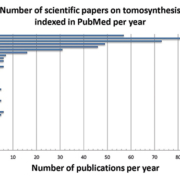
The next step forward was the implementation  of a device, where each measured radiographic  image can be stored separately and processed after the examination  instead of integrating the measurements directly on film. By doing this, it is possible to generate an arbitrary number of planes or laminograms  through the object based on the limited number of measured radiographs. The total radiation  dose can be reduced  because only one examination is needed to produce images of the whole volume. This is essentially the main idea of modern  tomosynthesis  as it is known today. The word tomosynthesis was introduced by D. G. Grant in 1972. A number of further improvements of tomosynthesis,  mainly focused on improving image quality and shortening acquisition time,  have been proposed during the 1970s and 1980s. The review papers by Dobbins give a detailed overview of tomosynthesis research during the 1970s and 1980s.

In that same year (1972),  there was an another development when Sir Godfrey  Hounsfield  and James Ambrose  gave a talk on

https://interhospi.com/wp-content/uploads/sites/3/2020/08/IH317_pub_med_trend_tomosynthesis.jpg 375 500 3wmedia https://interhospi.com/wp-content/uploads/sites/3/2020/06/Component-6-–-1.png 3wmedia2020-08-26 14:21:112021-01-08 12:32:23Digital tomosynthesis at a glance: a scientific review
Page 48 of 103«‹4647484950›»

Latest issue of International Hospital

April 2024

2 June 2026

DeepHealth achieves multiple regulatory milestones for Neuro, Prostate and LumbarMR

7 January 2026

Gulf Aorta Summit 2026 Returns to Dubai with a Global Lineup of Aortic Experts

17 December 2025

GE HealthCare receives CE mark for 128cm total body PET/CT

Digital edition
All articles Archived issues

Free subscription

View more product news

Get our e-alert

The medical devices information portal connecting healthcare professionals to global vendors

Sign in for our newsletter
  • News
    • Featured Articles
    • Product News
    • E-News
  • Magazine
    • About us
    • Archived issues
    • Media kit
    • Submit Press Release

Prins Hendrikstraat 1
5611HH Eindhoven
The Netherlands
info@interhospi.com

PanGlobal Media IS not responsible for any error or omission that might occur in the electronic display of product or company data.

Scroll to top

This site uses cookies. By continuing to browse the site, you are agreeing to our use of cookies.

Accept settingsHide notification onlyCookie settings

Cookie and Privacy Settings


How we use cookies

We may ask you to place cookies on your device. We use cookies to let us know when you visit our websites, how you interact with us, to enrich your user experience and to customise your relationship with our website.

Click on the different sections for more information. You can also change some of your preferences. Please note that blocking some types of cookies may affect your experience on our websites and the services we can provide.

Essential Website Cookies

These cookies are strictly necessary to provide you with services available through our website and to use some of its features.

Because these cookies are strictly necessary to provide the website, refusing them will affect the functioning of our site. You can always block or delete cookies by changing your browser settings and block all cookies on this website forcibly. But this will always ask you to accept/refuse cookies when you visit our site again.

We fully respect if you want to refuse cookies, but to avoid asking you each time again to kindly allow us to store a cookie for that purpose. You are always free to unsubscribe or other cookies to get a better experience. If you refuse cookies, we will delete all cookies set in our domain.

We provide you with a list of cookies stored on your computer in our domain, so that you can check what we have stored. For security reasons, we cannot display or modify cookies from other domains. You can check these in your browser's security settings.

.

Google Analytics Cookies

These cookies collect information that is used in aggregate form to help us understand how our website is used or how effective our marketing campaigns are, or to help us customise our website and application for you to improve your experience.

If you do not want us to track your visit to our site, you can disable this in your browser here:

.

Other external services

We also use various external services such as Google Webfonts, Google Maps and external video providers. Since these providers may collect personal data such as your IP address, you can block them here. Please note that this may significantly reduce the functionality and appearance of our site. Changes will only be effective once you reload the page

Google Webfont Settings:

Google Maps Settings:

Google reCaptcha settings:

Vimeo and Youtube videos embedding:

.

Privacy Beleid

U kunt meer lezen over onze cookies en privacy-instellingen op onze Privacybeleid-pagina.

Privacy policy
Accept settingsHide notification only

Sign in for our newsletter

Free subscription