• News
    • Featured Articles
    • Product News
    • E-News
  • Magazine
    • About us
    • Digital edition
    • Archived issues
    • Media kit
    • Submit Press Release
  • White Papers
  • Events
  • Suppliers
  • E-Alert
  • Contact us
  • FREE newsletter subscription
  • Search
  • Menu Menu
International Hospital
  • AI
  • Cardiology
  • Oncology
  • Neurology
  • Genetics
  • Orthopaedics
  • Research
  • Surgery
  • Innovation
  • Medical Imaging
  • MedTech
  • Obs-Gyn
  • Paediatrics

Archive for category: Featured Articles

Featured Articles

Machine intelligence in the OR: optimizing the effectiveness of surgeons with IT tools

, 26 August 2020/in Featured Articles /by 3wmedia

Medicine is undergoing a historic transition, moving away from a trial-and-error model of care, towards individualized treatment strategies based on patient-specific knowledge management of disease and treatment. Not only the biomedical systems sciences and engineering, mathematics, medical imaging and medical informatics but also the discipline of machine intelligence and in a wider sense computer assisted radiology and surgery (CARS) are enablers of this new paradigm. With an appropriate ICT platform, for example, medical workstations for domain-specific applications, they provide the methods and tools for knowledge management and specifically for a patient-specific medicine.

Important aspects of these dramatically evolving and ICT based methodologies and tools are possibilities for:

  1. Modelling of human organ systems, pathologies and clinical processes from scientifically based evidence, medical guidelines and data mining.
  2. Analysis (e.g. inferencing) and adaptation (e.g. domain-specific learning) of models from data and information gathered from specific patients through imaging and biosensors in order to generate knowledge models of patient-specific situations to improve accuracy of diagnosis and appropriateness of treatment processes.
  3. Higher quality of therapeutic interventions by means of real time integration of information in patient-specific models and therapeutic processes through computer assisted workflow, knowledge and decision management

With an appropriate employment of these methods and tools, they become enablers of intelligent infrastructures and processes in medical diagnosis and therapy, hopefully making complex situations and processes in healthcare more comprehensible, visible, reproducible, transparent and understandable for the human, i.e. for the physician and patient……

Download white paper to continue reading

https://interhospi.com/wp-content/uploads/sites/3/2020/08/IH88a_Lemke.jpg 650 500 3wmedia https://interhospi.com/wp-content/uploads/sites/3/2020/06/Component-6-–-1.png 3wmedia2020-08-26 14:21:112021-01-08 12:32:29Machine intelligence in the OR: optimizing the effectiveness of surgeons with IT tools

We’d like to introduce you to our new baby. The new DRX 2530C detector

, 26 August 2020/in Featured Articles /by 3wmedia
https://interhospi.com/wp-content/uploads/sites/3/2020/08/46289_carestream.jpg 991 700 3wmedia https://interhospi.com/wp-content/uploads/sites/3/2020/06/Component-6-–-1.png 3wmedia2020-08-26 14:21:112021-01-08 12:32:33We’d like to introduce you to our new baby. The new DRX 2530C detector

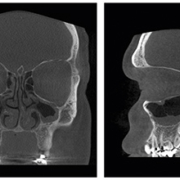
A new, large field of view Cone Beam system for head & neck imaging is in clinical validation use at Tampere University Hospital

, 26 August 2020/in Featured Articles /by 3wmedia

The SCANORA

https://interhospi.com/wp-content/uploads/sites/3/2020/08/IH77_Case1.jpg 220 400 3wmedia https://interhospi.com/wp-content/uploads/sites/3/2020/06/Component-6-–-1.png 3wmedia2020-08-26 14:21:112021-01-08 12:32:37A new, large field of view Cone Beam system for head & neck imaging is in clinical validation use at Tampere University Hospital

Scientific literature: Hospital hygiene

, 26 August 2020/in Featured Articles /by 3wmedia

The number of peer-reviewed papers covering the field of hospital hygiene is huge, to such an extent that it is frequently difficult for healthcare professionals to keep up with the literature. As a special service to our readers, International Hospital presents a few key literature abstracts from the clinical and scientific literature chosen by our editorial board as being particularly worthy of attention.

Hand Hygiene: State-of-the-Art Review With Emphasis on New Technologies and Mechanisms of Surveillance

Marra A, Edmond E. Current Infect. Disease Reports.  2012 Dec. 14:6: 585-591.

Hand hygiene (HH) is an important measure in infection prevention to decrease transmission of microbial pathogens; however, HH compliance by healthcare workers (HCWs) remains suboptimal. One of the principal recommendations of current guidelines is that waterless, alcohol-based hand rubs are the preferred method for HH in most situations, due to the superior efficacy of these agents in rapidly reducing bacterial counts on hands and their ease of use. Improving HH compliance is a good quality indicator for hospital patient safety programmes. Observers can follow HCWs to perform direct HH observations; however, HCWs may be prompted to clean their hands when observers are nearby, which does not represent real-world conditions. Moreover, having observers walk into patient rooms violates patient privacy and is time consuming. HH strategies using indirect metrics for surveillance (e.g., measuring the volume of HH products consumed) and the use of new technologies (e.g., electronic dispenser counters, radiofrequency, alcohol sensors, and video recording) will also be discussed.

Infection control practices among doctors and nurses in a tertiary care hospital

Jain M et al.  Ann Trop Med Public Health 2012;5:29-33

Basic infection control measures in any healthcare setup can reduce the rates of healthcare-associated infections. A study to assess the knowledge and practice of 400 healthcare personnel regarding hospital infection control practices was performed. A structured questionnaire was distributed to the study group and collected the same day. Knowledge and practices of 329 nurses and 71 doctors regarding hand hygiene, standard precautions (SPs), hospital environmental cleaning and needle stick injury were collected and analysed. The results show that the study group had suboptimal knowledge regarding the SPs (55.3%) and risks associated with needle stick injuries (31.8%). The implementation of SPs was biased towards the HIV positive status of the patient. Only 57% of the doctors and nurses followed the maximal barrier precautions before a central venous catheter insertion. The study concludes that the lack of knowledge and practices regarding basic infection control protocols should be improved by way of educational intervention, in the form of formal training of the doctors and nurses and reinforcement of the same.

Is reprocessing after disuse a safety procedure for bronchoscopy? A cross-sectional study in a teaching hospital in Rome.

Marino M et al. Gastroenterol Nurs. 2012 Sep; 35(5): 324-30.

A bacteriological assessment was carried out of flexible bronchoscopes that were stored after a reprocessing procedure was performed to determine whether reprocessing removes microbiological contamination and whether the instruments could be used safely after extended storage without repeating the disinfection before bronchoscopy. The pre-reprocessing and post-reprocessing liquid sample that was taken from the stored instruments

https://interhospi.com/wp-content/uploads/sites/3/2020/08/Sci-Lit-pic_05.jpg 100 150 3wmedia https://interhospi.com/wp-content/uploads/sites/3/2020/06/Component-6-–-1.png 3wmedia2020-08-26 14:21:112021-01-08 12:32:43Scientific literature: Hospital hygiene

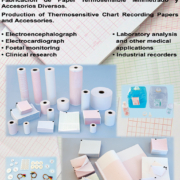
Production of Thermosensitive Chart Recording Papers and Acc.

, 26 August 2020/in Featured Articles /by 3wmedia
https://interhospi.com/wp-content/uploads/sites/3/2020/08/46377_LESSA-AD-IHE.jpg 1000 517 3wmedia https://interhospi.com/wp-content/uploads/sites/3/2020/06/Component-6-–-1.png 3wmedia2020-08-26 14:21:112021-01-08 12:32:25Production of Thermosensitive Chart Recording Papers and Acc.

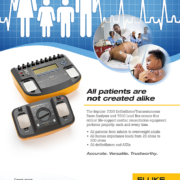
The Impulse 7000 Defibrillator/Transcutaneous Pacer Analyzer

, 26 August 2020/in Featured Articles /by 3wmedia
https://interhospi.com/wp-content/uploads/sites/3/2020/08/46451_4264303A_EN_Impendance_Ad_International_Hospita_FullPageBleedl.jpg 990 700 3wmedia https://interhospi.com/wp-content/uploads/sites/3/2020/06/Component-6-–-1.png 3wmedia2020-08-26 14:21:112021-01-08 12:32:19The Impulse 7000 Defibrillator/Transcutaneous Pacer Analyzer

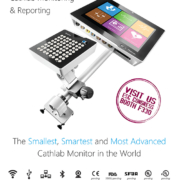
Fysicon QMAPP Cathlab Monitoring & Reporting

, 26 August 2020/in Featured Articles /by 3wmedia
https://interhospi.com/wp-content/uploads/sites/3/2020/08/46418-Fysicon-Qmapp.jpg 991 700 3wmedia https://interhospi.com/wp-content/uploads/sites/3/2020/06/Component-6-–-1.png 3wmedia2020-08-26 14:21:112021-01-08 12:32:24Fysicon QMAPP Cathlab Monitoring & Reporting

Checking those vital signs

, 26 August 2020/in Featured Articles /by 3wmedia

Medical devices and equipment used to check for and monitor people

https://interhospi.com/wp-content/uploads/sites/3/2020/08/IH75_Fig1.jpg 343 300 3wmedia https://interhospi.com/wp-content/uploads/sites/3/2020/06/Component-6-–-1.png 3wmedia2020-08-26 14:21:112021-01-08 12:32:29Checking those vital signs

A Step Closer. Reach beyound boundaries.

, 26 August 2020/in Featured Articles /by 3wmedia
https://interhospi.com/wp-content/uploads/sites/3/2020/08/IHE_13MarApr_Mindray.jpg 977 700 3wmedia https://interhospi.com/wp-content/uploads/sites/3/2020/06/Component-6-–-1.png 3wmedia2020-08-26 14:21:112021-01-08 12:32:33A Step Closer. Reach beyound boundaries.

Fluence field modulated CT: A novel approach for noise and dose management in CT

, 26 August 2020/in Featured Articles /by 3wmedia

CT scans produce high resolution, three-dimensional (3D) images routinely used in medical diagnostic and image guidance procedures.  The rapid advances in CT, including faster acquisition times and enhanced tissue discrimination capabilities, have also led to a broader range of applications for CT.  Recently, however, there has been increased concern regarding the radiation dose received by patients during CT scans.  Risks due to radiation are present because CT generates 3D images from a set of X-ray radiographs (or projections), which are recorded at different angles as the X-ray source rotates about the patient.  

by Steven Bartolac and Dr David Jaffray

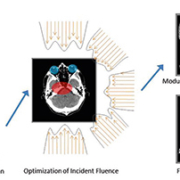
The concerns regarding radiation have been largely stimulated by a number of publications produced over the last five years that have indicated that the number of CT scanning procedures is on the rise (on the order of about 10% per year [1]), and that the increased risk of cancer due to radiation doses received from CT scans may be non-negligible [2], especially in patients receiving multiple CT scans [3].  Motivated by these concerns, fluence field modulated computed tomography (FFMCT) has been proposed as a new approach for CT imaging that promises better management of dose to the patient [4-6] without sacrificing image quality [See Fig. 1].   

The tradeoff between image quality and radiation exposure
Though image quality is dependent on many factors, including image blur, and distortions that can arise from poor modelling of the X-ray physics, image noise is often a key determinant of image quality and the utility of CT scans, and is most directly related to the imaging dose.  Image noise refers to random fluctuations in the image, which, when large, can obscure the details of interest.  In CT images, the largest source of noise is due to inherent statistical fluctuations associated with photon counting (i.e. Poisson noise). The magnitude of this noise is inversely proportional to the average number of photons that reach the detector. Increasing the number of incident photons, or the X-ray fluence (i.e. photons/unit area) can help limit noise in the image but also results in increases in dose.  Conversely, attempting to reduce the dose is associated with increased noise.  Managing this tradeoff requires choosing the most appropriate scan settings considering the imaging task, and individual factors including patient age and size.   

Conventional strategies for dose management

Non-uniformity of noise in CT images  (i.e. image noise which changes in magnitude at different positions within the image) occur because different regions of the patient attenuate the X-ray fluence to varying degrees.  Generally, a longer path length through the patient suggests greater attenuation of the beam, and greater noise associated along that X-ray path.  If the patient is modelled as an elliptic cylinder, the path length is longer near the centre of the patient than near the periphery.  To compensate for these changes, bowtie filters are typically included in conventional scanners to limit the incident fluence at the peripheries of the patient and allow higher fluence near the centre, creating a more uniform exposure at the detector. In this way, overexposure to the peripheries is prevented when attempting to limit noise near the centre of the patient.  In the elliptical model, some views of the patient are also more greatly attenuating than others.  Tube current modulation (TCM) is therefore used in conjunction with bowtie filters, which allows the overall fluence to be increased or decreased depending on the view. [See Fig. 2 for schematic illustrations of bowtie filtration and TCM.]

FFMCT: a new paradigm for CT imaging

Though bowtie filters and TCM greatly aid in decreasing dose to patients, patient anatomy is inherently more complex than the representation by a simple elliptical shape.  The presence of bony and lung tissue, for example, introduces large variations in beam attenuation across the field of view. The pattern of beam attenuation also depends greatly on the incident angle of the X-rays.  Contrary to conventional approaches that use a fixed filter in place throughout the scan, FFMCT proposes to use a dynamic modulator allowing the fluence to change freely across the field of view and for different projection angles, such that each projection may have a distinct incident fluence pattern [See Fig. 1].

Increased flexibility in the delivery of X-ray fluence suggests better management of dose since higher exposures can be reduced where not required for maintaining the desired image quality.  In the proposed methodology for FFMCT, an input model of the patient could be used to define an image quality plan defining the desired image quality for the given task [See Fig. 1]. The plan could further define specific regions where low dose is a priority.  An optimization algorithm can then be used to search for a modulation pattern that comes as close to the planned objectives as possible.  As many patients undergo multiple CT scans, a previous CT scan could potentially be used as the model; alternatively, a population based model could be used.

Achieving task-based, user-defined image quality
In many cases, the desired image quality may vary within the image.  For example, one might desire higher image quality in a small region of interest (ROI) near a suspicious lesion in a repeat CT scan; in another case,  one might only be interested in the region of the heart in a cardiac CT scan; in an image-guided surgical procedure, the ROI may be restricted to a localized region surrounding a surgical instrument.   In these cases, allowing the image quality to be reduced outside the ROI may be advantageous, since it suggests a reduction in total dose to the patient.  Initial research [5, 6] has suggested that fluence modulation patterns can be found that allow for better uniformity of image quality in target ROIs than afforded by conventional means, while allowing for image quality elsewhere to be reduced.  [See Figs. 3 and 4.] 

Dose reduction
The amount of dose reduction possible compared to conventional approaches using fluence field modulation depends highly on the patient and the task.  Preliminary research using a simulated thorax phantom [5, 6] suggests that integral dose reduction across a single image slice (in Joules) could range up to 50% or higher for applications where the region of interest is well localized [5]. Local dose reductions (in cGy) outside the ROIs can approach 60-80%. Research is ongoing for evaluation of dose benefits to other sites. 

Technology advances towards FFMCT
Currently, no device has been introduced in modern scanners that can offer the unconstrained, flexible modulation patterns proposed for fluence field modulation.  Design challenges include speed demands on dynamic modulators given the very rapid gantry speeds of conventional scanners, and changes to the energy spectrum of the incident beam that might occur as a by-product of modulation using a dynamic filter.  However, several simplified approaches for modulator designs have been proposed that make significant steps towards achieving fluence field modulation in clinical scanners, including a series of sliding wedges [7], dynamically moving discrete apertures [8, 9], and multiple sources in inverse geometry CT [10] (e.g. the


https://interhospi.com/wp-content/uploads/sites/3/2020/08/IH81_Figure-1.jpg 202 400 3wmedia https://interhospi.com/wp-content/uploads/sites/3/2020/06/Component-6-–-1.png 3wmedia2020-08-26 14:21:112021-01-08 12:32:37Fluence field modulated CT: A novel approach for noise and dose management in CT
Page 52 of 103«‹5051525354›»

Latest issue of International Hospital

April 2024

2 June 2026

DeepHealth achieves multiple regulatory milestones for Neuro, Prostate and LumbarMR

7 January 2026

Gulf Aorta Summit 2026 Returns to Dubai with a Global Lineup of Aortic Experts

17 December 2025

GE HealthCare receives CE mark for 128cm total body PET/CT

Digital edition
All articles Archived issues

Free subscription

View more product news

Get our e-alert

The medical devices information portal connecting healthcare professionals to global vendors

Sign in for our newsletter
  • News
    • Featured Articles
    • Product News
    • E-News
  • Magazine
    • About us
    • Archived issues
    • Media kit
    • Submit Press Release

Prins Hendrikstraat 1
5611HH Eindhoven
The Netherlands
info@interhospi.com

PanGlobal Media IS not responsible for any error or omission that might occur in the electronic display of product or company data.

Scroll to top

This site uses cookies. By continuing to browse the site, you are agreeing to our use of cookies.

Accept settingsHide notification onlyCookie settings

Cookie and Privacy Settings


How we use cookies

We may ask you to place cookies on your device. We use cookies to let us know when you visit our websites, how you interact with us, to enrich your user experience and to customise your relationship with our website.

Click on the different sections for more information. You can also change some of your preferences. Please note that blocking some types of cookies may affect your experience on our websites and the services we can provide.

Essential Website Cookies

These cookies are strictly necessary to provide you with services available through our website and to use some of its features.

Because these cookies are strictly necessary to provide the website, refusing them will affect the functioning of our site. You can always block or delete cookies by changing your browser settings and block all cookies on this website forcibly. But this will always ask you to accept/refuse cookies when you visit our site again.

We fully respect if you want to refuse cookies, but to avoid asking you each time again to kindly allow us to store a cookie for that purpose. You are always free to unsubscribe or other cookies to get a better experience. If you refuse cookies, we will delete all cookies set in our domain.

We provide you with a list of cookies stored on your computer in our domain, so that you can check what we have stored. For security reasons, we cannot display or modify cookies from other domains. You can check these in your browser's security settings.

.

Google Analytics Cookies

These cookies collect information that is used in aggregate form to help us understand how our website is used or how effective our marketing campaigns are, or to help us customise our website and application for you to improve your experience.

If you do not want us to track your visit to our site, you can disable this in your browser here:

.

Other external services

We also use various external services such as Google Webfonts, Google Maps and external video providers. Since these providers may collect personal data such as your IP address, you can block them here. Please note that this may significantly reduce the functionality and appearance of our site. Changes will only be effective once you reload the page

Google Webfont Settings:

Google Maps Settings:

Google reCaptcha settings:

Vimeo and Youtube videos embedding:

.

Privacy Beleid

U kunt meer lezen over onze cookies en privacy-instellingen op onze Privacybeleid-pagina.

Privacy policy
Accept settingsHide notification only

Sign in for our newsletter

Free subscription