• News
    • Featured Articles
    • Product News
    • E-News
  • Magazine
    • About us
    • Digital edition
    • Archived issues
    • Media kit
    • Submit Press Release
  • White Papers
  • Events
  • Suppliers
  • E-Alert
  • Contact us
  • FREE newsletter subscription
  • Search
  • Menu Menu
International Hospital
  • AI
  • Cardiology
  • Oncology
  • Neurology
  • Genetics
  • Orthopaedics
  • Research
  • Surgery
  • Innovation
  • Medical Imaging
  • MedTech
  • Obs-Gyn
  • Paediatrics

Archive for category: Featured Articles

Featured Articles

PET/MRI: enabling combined metabolic-anatomical imaging

, 26 August 2020/in Featured Articles /by 3wmedia

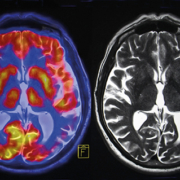
PET/MRI is a hybrid combination of two imaging modalities. The first consists of positron emission tomography (PET) for ultra-sensitive imaging of metabolism and tracking uniquely labelled cell types or cell receptors. The second consists of the structural and functional characterization of tissue provided by magnetic resonance imaging (MRI).
The combination of metabolic and anatomical imaging provides superior diagnostic capabilities in certain clinical situations – above all, for cancer.

PET: 18F-FDG and tumour response
PET has a uniquely high sensitivity, in the picomolar range, and uses radio-labelled tracers which provide molecular information for characterizing tumours and metastases. The tracers are injected in minute, non-pharmacological doses, and 3-D images are subsequently reconstructed by computer to show the concentration and location of specific tracers.
PET rapidly began to gain traction in the early 2000s, after it was realized that the imaging of specific molecular targets associated with cancer would permit earlier diagnosis and better management of oncology patients. A review published in 2002 foresaw PET becoming increasingly important in cancer imaging over the decade.  Since then, PET has offered a way out of some of the key limitations in anatomical approaches for imaging cancer biology.
More recently, PET has begun to gain widespread acceptance for assessments of tumour response to chemotherapy and radiotherapy, when combined with the 18F-fluorodeoxyglucose (18F-FDG), glucose analogue. The commercial availability of the latter catalysed widespread introduction of PET in smaller hospitals and medical centres. Although quantitative analysis of 18F-FDG uptake is required for predicting tumour response early in therapy, according to some a visual interpretation of scans is often sufficient to assess response after the completion of therapy.

PET/CT seeks to address anatomical information deficit
PET images, however, still lack detailed anatomical information. An effort to address such a lack was to fuse PET data with high-resolution, three-dimensional morphological images from computer tomography (CT), which have been achieving sub-millimetre spatial resolution for well over a decade. Since the mid-2000s, PET examinations have indeed been performed in combination with CT and hybrid PET/CT systems have shown far greater accuracy in data registration from the two modalities than achievable by software fusion of separate images. The hybrid data has of course also proven to be of higher diagnostic value than either PET or CT on their own – apart from also simplifying the logistics of patient management. New PET installations are now almost exclusively comprised of combined PET/CT scanners
Key advantages of the combination, according to a 2009 study by Vanderbilt University Medical Center in the US include superior lesion detection, improvement in the localization of foci of uptake resulting in


https://interhospi.com/wp-content/uploads/sites/3/2020/08/IH84_PET_MRIhybrid_Tosh_thematic.jpg 319 500 3wmedia https://interhospi.com/wp-content/uploads/sites/3/2020/06/Component-6-–-1.png 3wmedia2020-08-26 14:18:552021-01-08 12:31:09PET/MRI: enabling combined metabolic-anatomical imaging

Medica 2015, 16-19 November 2015

, 26 August 2020/in Featured Articles /by 3wmedia
https://interhospi.com/wp-content/uploads/sites/3/2020/08/46836_2015_07_27_MEDICA_2015_International_MEDICA_2015_92x270mm_IHE_International_Hospital_Equipment_Solution__4c_4331.jpg 1000 339 3wmedia https://interhospi.com/wp-content/uploads/sites/3/2020/06/Component-6-–-1.png 3wmedia2020-08-26 14:18:552021-01-08 12:31:16Medica 2015, 16-19 November 2015

CVD: obstacles to innovation in Europe

, 26 August 2020/in Featured Articles /by 3wmedia

Although innovations in tests and treatments have allowed a dramatic reduction in cardiovascular disease mortality in recent decades, CVD is still the leading cause of death in Europe. And the major concern now is that this steady reduction in mortality is beginning to plateau due to the diabetes and obesity

https://interhospi.com/wp-content/uploads/sites/3/2020/08/Frances1_19.jpg 300 218 3wmedia https://interhospi.com/wp-content/uploads/sites/3/2020/06/Component-6-–-1.png 3wmedia2020-08-26 14:18:552021-01-08 12:31:21CVD: obstacles to innovation in Europe

Esaote MyLab: Ultrasound imaging technology tailored for the user

, 26 August 2020/in Featured Articles /by 3wmedia

As a leading player in the diagnostic ultrasound market, active since 1983, Esaote has a long experience in developing and fine-tuning ultrasound systems and probes for a broad range of clinical segments. 

MyLab Ultrasound solutions are shaped to answer the most demanding clinical needs in many applications: from abdominal to vascular, including musculoskeletal, internal medicine, cardiology, obstetrics and gynecology, as well as interventional ultrasound guidance.

Esaote puts a high effort in designing systems that offer top image quality for confident diagnosis from difficult-to-scan patients up to fully detailed superficial image resolution. This has been achieved over the years through advanced research, with several patents and publications, and effective implementations on the system and also on the probe side, the latter offering a broad choice of in-house made transducers  ranging from traditional phased, linear, convex and endocavity to dedicated solutions for surgery and intervention. The Esaote probe family has recently been extended with the brand new High Frequency Hockey Stick probe IH 6-18 and the Biopsy dedicated 0 degree insertion convex transducer SI2C41.
Customizable buttons on the probe body enhance comfort and increase possibilities.

Advanced hemodynamic evaluation tools such as XFlow and HD CFM, tissue stiffness evaluation with ElaXto as well as Virtual Navigator for easy-to-perform real-time fusion imaging are just a few examples of Esaote advanced technologies tailored to  meet any requirements up to the most demanding ones.

Virtual Biopsy and Needle Enhancement technology are valuable tools to facilitate needle insertions for simple biopsies as well as percutaneous treatments.

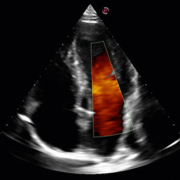
Top level Contrast Enhanced Ultrasound (CEUS) as well as advanced cardiovascular tools such as the 4D XStrain volumetric cardiac deformation analysis tool and the Radiofrequency-based Intima Media Thickness (QIMT) and Arterial Stiffness (QAS) measurement tools are featured, reflecting the

https://interhospi.com/wp-content/uploads/sites/3/2020/08/1_03.jpg 271 300 3wmedia https://interhospi.com/wp-content/uploads/sites/3/2020/06/Component-6-–-1.png 3wmedia2020-08-26 14:18:552021-01-08 12:31:04Esaote MyLab: Ultrasound imaging technology tailored for the user

Acoustic angiography – towards new tumour morphology metrics

, 26 August 2020/in Featured Articles /by 3wmedia

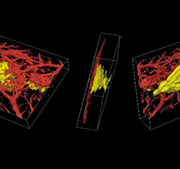
Acoustic angiography is a method to acquire images that possess both high resolution as well as a superior contrast-to-tissue ratio. As opposed to clinical

https://interhospi.com/wp-content/uploads/sites/3/2020/08/IH85_image3.jpg 169 300 3wmedia https://interhospi.com/wp-content/uploads/sites/3/2020/06/Component-6-–-1.png 3wmedia2020-08-26 14:18:552021-01-08 12:31:10Acoustic angiography – towards new tumour morphology metrics

Video laryngoscopy – ease of use and quick training drive acceptance

, 26 August 2020/in Featured Articles /by 3wmedia

Introduced in the early 2000s, video laryngoscopy marks the first major development in airway management since the advent of laryngeal mask airways. In 2012, Ron Walls, then the Neskey Family Professor of Emergency Medicine at Harvard Medical School provoked considerable controversy after he

https://interhospi.com/wp-content/uploads/sites/3/2020/08/IH77_videolaryn_Tosh_thematic_cropped.jpg 300 271 3wmedia https://interhospi.com/wp-content/uploads/sites/3/2020/06/Component-6-–-1.png 3wmedia2020-08-26 14:18:552021-01-08 12:31:17Video laryngoscopy – ease of use and quick training drive acceptance

KIMES 2015 takes a look at tomorrow?s medical technology

, 26 August 2020/in Featured Articles /by 3wmedia

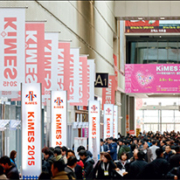
From 5 to 8 March 2015, the 31st Korea International Medical & Hospital Show in Seoul brought together domestic and overseas manufacturers and medical professionals.

More than 72,000 visitors convened last March to the COEX exhibition centre where KIMES is taking place every year. The 2015 edition saw 1145 companies showcasing their products over 38,350 square meters of exhibition space. Among exhibitors, the highest number unsurprisingly was from Korea, represented by 530 manufacturers, followed by China (137), the US (117), Germany (96) and Japan (67).
According to the post-show survey carried out by the organizers, a majority of exhibitors obtained positive results and fruitful contacts with qualified visitors at KIMES 2015. Most of them also reported that the medical market was continuing to grow in the Asia region. This is one of the main factors driving the expansion of Korea

https://interhospi.com/wp-content/uploads/sites/3/2020/08/KIMES-2015-Conference_1.jpg 206 300 3wmedia https://interhospi.com/wp-content/uploads/sites/3/2020/06/Component-6-–-1.png 3wmedia2020-08-26 14:18:552021-01-08 12:31:21KIMES 2015 takes a look at tomorrow?s medical technology

The challenge of cleanliness – hospitals seek new approaches

, 26 August 2020/in Featured Articles /by 3wmedia

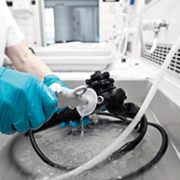
Resistant bacteria do not only resist antibiotics. They have also demonstrated the capacity to successfully fight antimicrobial agents and once-robust sterilization processes. Public pressure on hospitals to do more is illustrated by British daily

https://interhospi.com/wp-content/uploads/sites/3/2020/08/IH93_cleanliness_tosh_thematic.jpg 193 300 3wmedia https://interhospi.com/wp-content/uploads/sites/3/2020/06/Component-6-–-1.png 3wmedia2020-08-26 14:18:552021-01-08 12:31:04The challenge of cleanliness – hospitals seek new approaches

The Internet of Things – hospital connectivity?s smart new frontier

, 26 August 2020/in Featured Articles /by 3wmedia

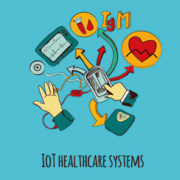
The Internet of Things (IoT) has been hailed by some commentators as one of the biggest revolutions in the hospital environment since the inception of patient monitoring equipment thirty years ago.
The latter triggered dramatic improvements in outcomes and explains the panoply of equipment now standard in every hospital room – from pulse oximeters, ECGs and apnea monitors to infusion pumps and ventilators.

False positives and negatives
Few doubt that healthcare today has improved because of such equipment. However, as the devices proliferated, another kind of risk has emerged. These monitoring devices operate independently, with no means to assimilate information from multiple sources and intelligently understand patient status. As a result, some devices can occasionally fail to issue an alarm (a false negative), while others do so wrongly (a false positive). On their part, healthcare staff members – whose numbers have shrunk as many of their tasks began to be handled by the devices – often tend to shut off what they believe are nuisance alarms.
Many are just that – nuisances. Some are not. In both cases of false positives and false negatives, human lives are often put at risk.

Nine of 10 healthcare IT departments ready for IoT

The Internet of Things (IoT) is seen to offer a way out of such challenges. IoT uses sensors, radio-frequency identification (RFID) and Real Time Location System (RTLS) to capture or monitor data and automatically trigger certain events.
In times past, healthcare sensors covered devices such as vital signs monitors. Today, those monitors and much other hospital equipment is connected by the IoT

https://interhospi.com/wp-content/uploads/sites/3/2020/08/IH83_internet_Tosh_thematic_crop.jpg 300 295 3wmedia https://interhospi.com/wp-content/uploads/sites/3/2020/06/Component-6-–-1.png 3wmedia2020-08-26 14:18:552021-01-08 12:31:10The Internet of Things – hospital connectivity?s smart new frontier

Blood conservation with a patient dedicated arterial blood gas analyser

, 26 August 2020/in Featured Articles /by 3wmedia

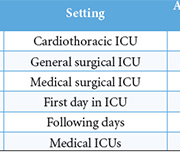
Anemia is a common complication of critical care, with up to 90% of ICU (Intensive Care Unit) patients being anemic by their third day in the ICU [1]. Anemia is associated with poor patient outcomes, especially amongst those patients with cardiovascular disease. The treatments of choice for anemia are the minimization of blood loss and the transfusion of red blood cells when necessary.
This article considers the issues in critical care around anemia, transfusions and blood conservation. With blood-based diagnostic testing being a significant factor in cumulative blood loss and the risk of anemia, the use of a patient dedicated arterial blood gas analyser to minimize blood loss is also described.

Anemia in the intensive care unit
Causes

The reasons for anemia in critically ill patients are multifactorial and include acute blood loss (e.g. from trauma, surgery or internal bleeding), iatrogenic blood loss associated with diagnostic sampling and blunted red blood cell production. Of these, blood loss associated with diagnostic testing is the factor that is most easily controlled by the intensivist.
Laboratory results are an important tool to achieve diagnosis and guide medical care, and a certain amount of blood is required to obtain this information. The gold standard for monitoring oxygenation, acid-base status and ventilation is an arterial blood gas measurement

https://interhospi.com/wp-content/uploads/sites/3/2020/08/p.19.jpg 154 500 3wmedia https://interhospi.com/wp-content/uploads/sites/3/2020/06/Component-6-–-1.png 3wmedia2020-08-26 14:18:552021-01-08 12:31:17Blood conservation with a patient dedicated arterial blood gas analyser
Page 74 of 103«‹7273747576›»

Latest issue of International Hospital

April 2024

2 June 2026

DeepHealth achieves multiple regulatory milestones for Neuro, Prostate and LumbarMR

7 January 2026

Gulf Aorta Summit 2026 Returns to Dubai with a Global Lineup of Aortic Experts

17 December 2025

GE HealthCare receives CE mark for 128cm total body PET/CT

Digital edition
All articles Archived issues

Free subscription

View more product news

Get our e-alert

The medical devices information portal connecting healthcare professionals to global vendors

Sign in for our newsletter
  • News
    • Featured Articles
    • Product News
    • E-News
  • Magazine
    • About us
    • Archived issues
    • Media kit
    • Submit Press Release

Prins Hendrikstraat 1
5611HH Eindhoven
The Netherlands
info@interhospi.com

PanGlobal Media IS not responsible for any error or omission that might occur in the electronic display of product or company data.

Scroll to top

This site uses cookies. By continuing to browse the site, you are agreeing to our use of cookies.

Accept settingsHide notification onlyCookie settings

Cookie and Privacy Settings


How we use cookies

We may ask you to place cookies on your device. We use cookies to let us know when you visit our websites, how you interact with us, to enrich your user experience and to customise your relationship with our website.

Click on the different sections for more information. You can also change some of your preferences. Please note that blocking some types of cookies may affect your experience on our websites and the services we can provide.

Essential Website Cookies

These cookies are strictly necessary to provide you with services available through our website and to use some of its features.

Because these cookies are strictly necessary to provide the website, refusing them will affect the functioning of our site. You can always block or delete cookies by changing your browser settings and block all cookies on this website forcibly. But this will always ask you to accept/refuse cookies when you visit our site again.

We fully respect if you want to refuse cookies, but to avoid asking you each time again to kindly allow us to store a cookie for that purpose. You are always free to unsubscribe or other cookies to get a better experience. If you refuse cookies, we will delete all cookies set in our domain.

We provide you with a list of cookies stored on your computer in our domain, so that you can check what we have stored. For security reasons, we cannot display or modify cookies from other domains. You can check these in your browser's security settings.

.

Google Analytics Cookies

These cookies collect information that is used in aggregate form to help us understand how our website is used or how effective our marketing campaigns are, or to help us customise our website and application for you to improve your experience.

If you do not want us to track your visit to our site, you can disable this in your browser here:

.

Other external services

We also use various external services such as Google Webfonts, Google Maps and external video providers. Since these providers may collect personal data such as your IP address, you can block them here. Please note that this may significantly reduce the functionality and appearance of our site. Changes will only be effective once you reload the page

Google Webfont Settings:

Google Maps Settings:

Google reCaptcha settings:

Vimeo and Youtube videos embedding:

.

Privacy Beleid

U kunt meer lezen over onze cookies en privacy-instellingen op onze Privacybeleid-pagina.

Privacy policy
Accept settingsHide notification only

Sign in for our newsletter

Free subscription