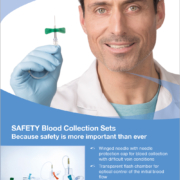
SAFETY Blood Collection Sets
Because safety is more important than ever

Because safety is more important than ever

Needlestick injuries are history
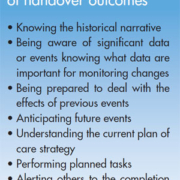
Inter-shift handover in the emergency department (ED) has long been identified as a high risk undertaking when it comes to patient safety. At the Graduate Entry Medical School, University of Limerick, the Lean process has been instrumental in helping to find solutions to current challenges in the emergency department.
by Dr Rosa McNamara and Dr Fergal Cummins
Patient handover is the term used to describe the act of transferring care from one healthcare professional to another. The terms ‘patient handoff’, ‘sign-out’ and ‘transitions of care’ are also used to describe this process. The act of handover has been identified as a risk in terms of patient safety, and has been described as a point where safety often fails first [1]. Faulty handoffs have been specifically implicated in 24% of malpractice claims in the Emergency Department [2].
Poor handover is associated with a number of adverse effects such as having to re-examine or re-interview the patient [4] inaccurate clinical assessment, delayed diagnosis, delayed investigation, medication errors, inconsistent or incorrect results translation, duplication of results, increased length of stay in hospital, increased in-hospital complications, and decreased patient satisfaction [3].
In a large prospective study, 914 patients were observed during 60 handovers in three metropolitan EDs [4]. They found that information was lacking in 15.4% of handovers, such as information on management, investigations or disposition. In these cases, 56.9% resulted in an adverse event for the doctor and 30.3% for the patient. Adverse events for the doctor included duplication of work, for example, re-interviewing or re-examination of the patient.
Although scripting or verbal standardisation has been recommended [5], a satisfactory and reliable tool to improve quality of ED handover remains elusive [6,7].
Recently, the American College of Emergency Physicians published a document detailing the current evidence regarding ED handoff, providing, a list of suggested handover quality measures, amongst other recommendations [8].
The Department of Emergency Medicine at the University Hospital, Limerick, sees approximately 60 000 patients per year. By applying these standards, it became clear that existing handover processes were inefficient and potentially posed a threat to patient safety. Formal documentation of handover on written notes was low. Only 6% of notes − on audit − met the standards suggested by the American College of Emergency Physicians.
During the auditing of the handover process, it became very clear that there was duplication of history taking and patient examination. After action group meetings within the ED between senior and junior medical staff, an initial decision was made to introduce a formal board round, and new policies were brought in to ensure handover was recorded using the electronic patient tracker programme (MAXIMS
REKA Health is a tele-health solutions provider that develops and markets an interactive health technology platform incorporating medical devices, application software, mobile apps, Cloud-based web applications and Personal Health Record (PHR). Founded in 2011, REKA Health is a spin-off from REKA and an ISO 13485-certified company with an established worldwide business network for the distribution of its solutions.
Strongly focussed on R&D, the company set out to find new areas of scientific innovation in technology and deliver IT-based solutions for improving healthcare.
Supporting chronic disease patients
The basic point of departure is a healthcare support model whereby chronic disease patients receive continuous care regardless of their whereabouts. REKA Health provides a platform for healthcare providers to interact with their chronic disease patients.
Patients are therefore able to provide their physician with more health information outside of the hospital. In turn, the physician can provide the diagnosed results to the patient via text message or email. This two-way communication allows patient and physician to interact via the REKA Health platform. The cycle of continuous, optimised care will lead to a better quality of life, timely treatment and peace of mind for chronic disease patients.
In practice, these patients are continuously monitored and provided with recommendations and advice to adjust their lifestyle, which, in turn, produce better care outcomes. This allows healthcare providers to expand their healthcare service spectrum to out-of-hospital and home care.
Mobile ECG & rhythm monitor
The increase of cell phone use to over 4 billion users worldwide, improved international mobile communications standards, dramatic advances in sensor technology and pervasive connectivity has enabled a new generation of superior mobile health products for use in the clinical arena. Exemplary of such advances is the REKA Health ECG event recorder device (E100).
E100 cardiac monitor
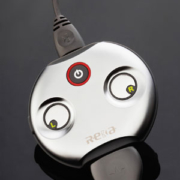
The E100 is a medical grade ECG Recorder and Heart Rhythm Monitor designed to address homecare and self-care needs. With the focus on user friendliness, the E100 is designed to capture a single-lead ECG and offers highly repeatable signal acquisition through simple and clearly indicated thumb placement.
‘A simple to use rhythm monitor with thumb electrodes enables patients of all ages and backgrounds to remotely transmit ECG data with clinical feasibility and rapidity that is heretofore unseen’ says Samir Damani, MD, PharmD about the E100
The promise of the Electronic Health Record (EHR) could only be disputed by today

Prins Hendrikstraat 1
5611HH Eindhoven
The Netherlands
info@interhospi.com
PanGlobal Media IS not responsible for any error or omission that might occur in the electronic display of product or company data.