Fujifilm Sonosite launches AI-powered PIV assistance feature providing real-time vessel identification
Fujifilm Sonosite has introduced PIV Assist, an artificial intelligence-powered ultrasound feature designed to support clinicians in planning peripheral intravenous (PIV) access procedures. The feature is available on the company’s Sonosite LX, PX, and ST ultrasound systems.
Supporting vascular access planning
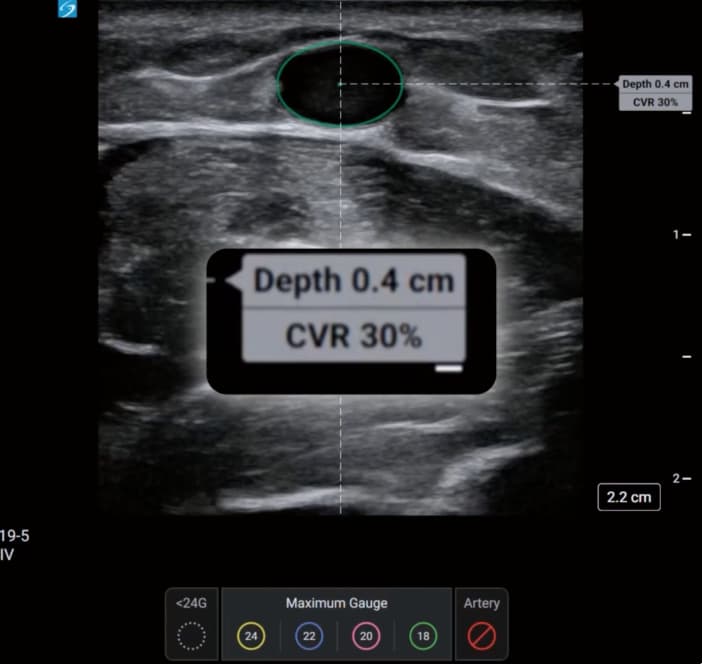
The AI-driven tool aims to assist healthcare professionals by identifying candidate veins and assessing vessel size during pre-procedural scanning. PIV Assist provides real-time differentiation between veins and arteries whilst calculating the catheter-to-vein ratio (CVR) to recommend maximum cannula sizes.
“Peripheral IV procedures are among the most common performed on patients, and growing evidence supports ultrasound-guided insertion as a helpful technique, especially for those with difficult IV access,” said Richard Fabian, president and CEO of Fujifilm Sonosite. “At Sonosite, we have a long history of innovation in both education and product development. PIV Assist is an AI-powered tool we developed in close collaboration with our customers. It’s designed to reduce cognitive load and enhance clinician confidence during vascular access planning – both of which are critical to delivering effective patient care.”
Key technical features
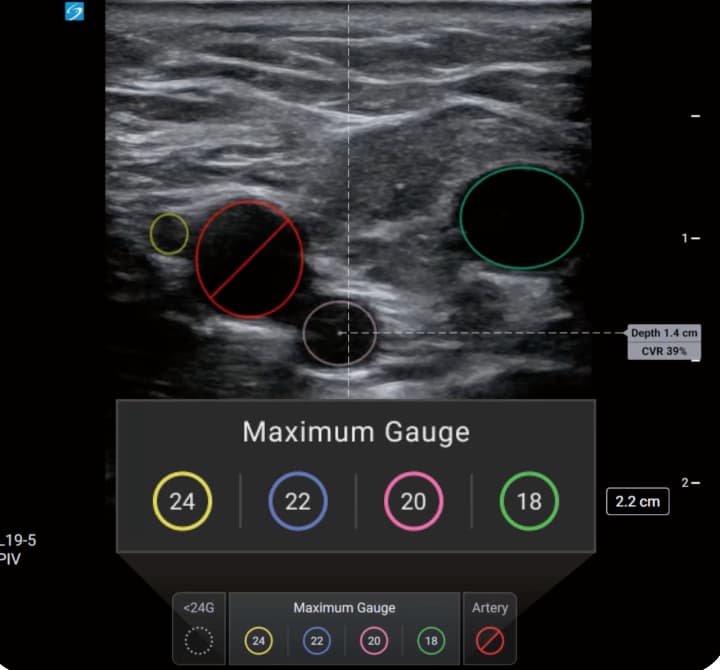
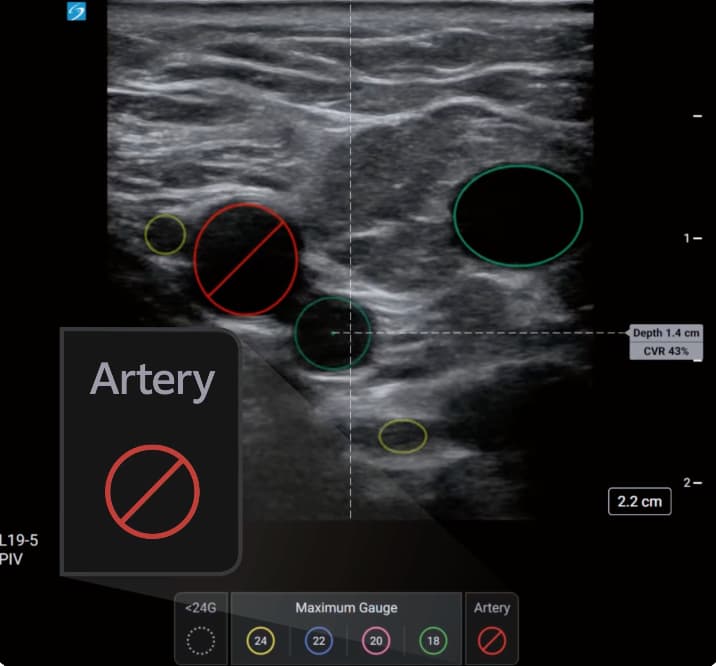
The system employs colour-coded visual guidance to assist procedural planning. Veins are marked according to maximum recommended catheter gauge, whilst arteries appear highlighted in red. The feature displays CVR calculations in real-time and indicates the depth to the centre of each identified vessel.
The AI algorithm underlying PIV Assist was trained using tens of thousands of scan images, according to the company. The feature is offered as a licensed add-on across the three compatible ultrasound platforms.
Clinical context
Ultrasound guidance for peripheral venous access has gained increasing clinical acceptance, particularly for patients presenting with difficult vascular access. Recent literature supports the use of ultrasound techniques to improve first-attempt success rates and reduce complications associated with PIV placement.
The introduction of AI-assisted vessel identification represents an extension of point-of-care ultrasound capabilities in vascular access procedures. By providing automated vessel analysis and CVR feedback, the technology aims to support clinical decision-making during the planning phase of peripheral IV insertion.
Availability
PIV Assist is currently available as a licensed feature for Sonosite LX, PX, and ST ultrasound systems. The company maintains a global distribution network spanning over 100 countries.
- For more information, visit: https://www.sonosite.com/products/sonosite-piv-assist