Siemens Healthineers introduces Magnetom Free.XL MRI scanner at RSNA 2025
Siemens Healthineers has introduced the Magnetom Free.XL, a 0.55 Tesla magnetic resonance imaging system engineered specifically for interventional radiology applications. The scanner features a 100cm flared bore opening and is designed to serve as the central component of an integrated interventional MRI suite developed in collaboration with Cook Medical.
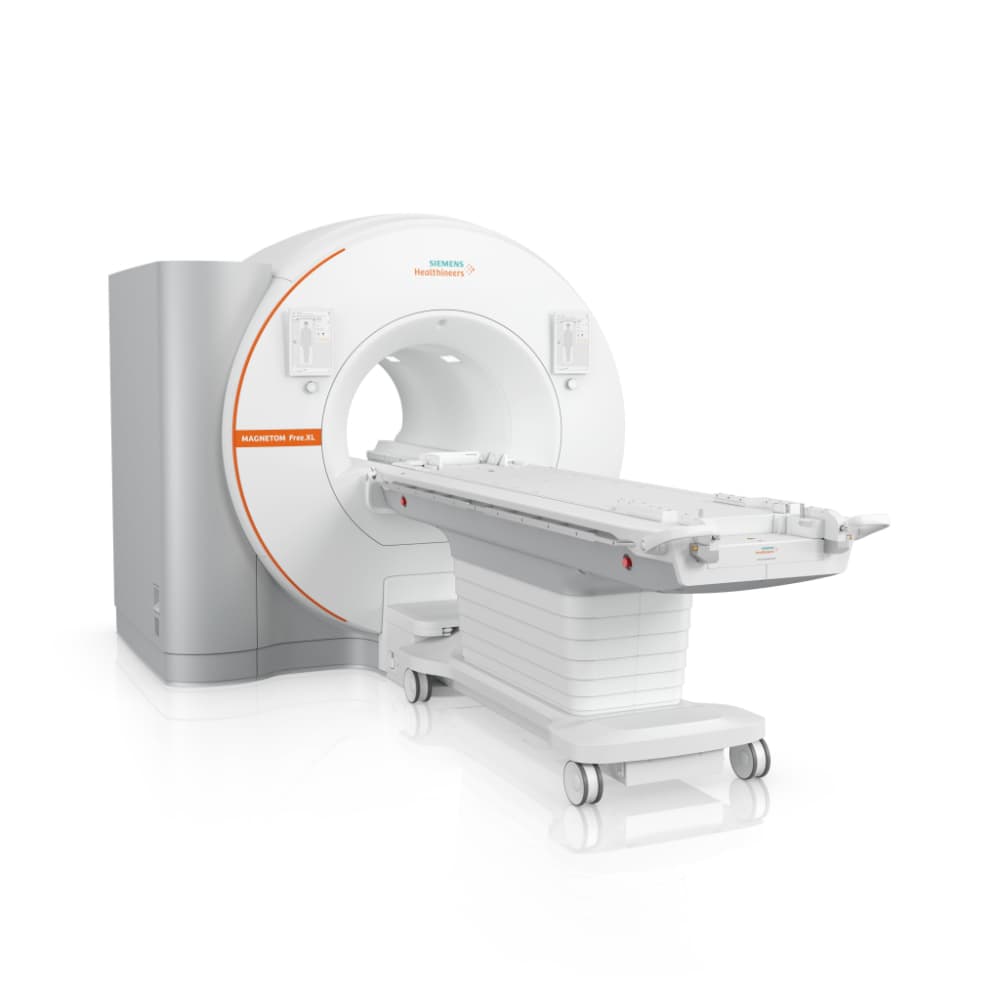
Siemens Healthineers presents Magnetom Free.XL, a 0.55T (Tesla) magnetic resonance imaging (MRI) system designed to meet the complex demands of interventional radiology. Magnetom Free.XL is planned to operate with DryCool technology and to support the full spectrum of diagnostic imaging at 0.55T – even outside interventional slots.
Enhanced access for interventional procedures
The system’s extra-wide bore and optionally lifted magnet configuration are intended to establish new standards for operator access during procedures. Ergonomic studies suggest the design may improve endurance and reduce fatigue for interventionalists performing complex interventions. The 0.55T field strength helps improve visibility of interventional devices whilst reducing metal artefacts and minimising heat effects, which are critical factors in safe MR-guided interventions.
“Magnetom Free.XL is designed to unlock the full potential of MR in the interventional suite, expanding the imaging toolbox by matching the right modality to the right patient at the right time,” said Andreas Schneck, head of Magnetic Resonance at Siemens Healthineers.
Advanced imaging and guidance capabilities
The system incorporates myNeedle Companion software for three-dimensional path planning, skin entry-point marking, and real-time navigation during needle-based procedures. XL gradients and Deep Resolve artificial intelligence-powered image reconstruction technology enable high-resolution soft-tissue contrast and real-time imaging across clinical applications. This marks the first time cardiac MR imaging at 0.55T enters clinical routine.
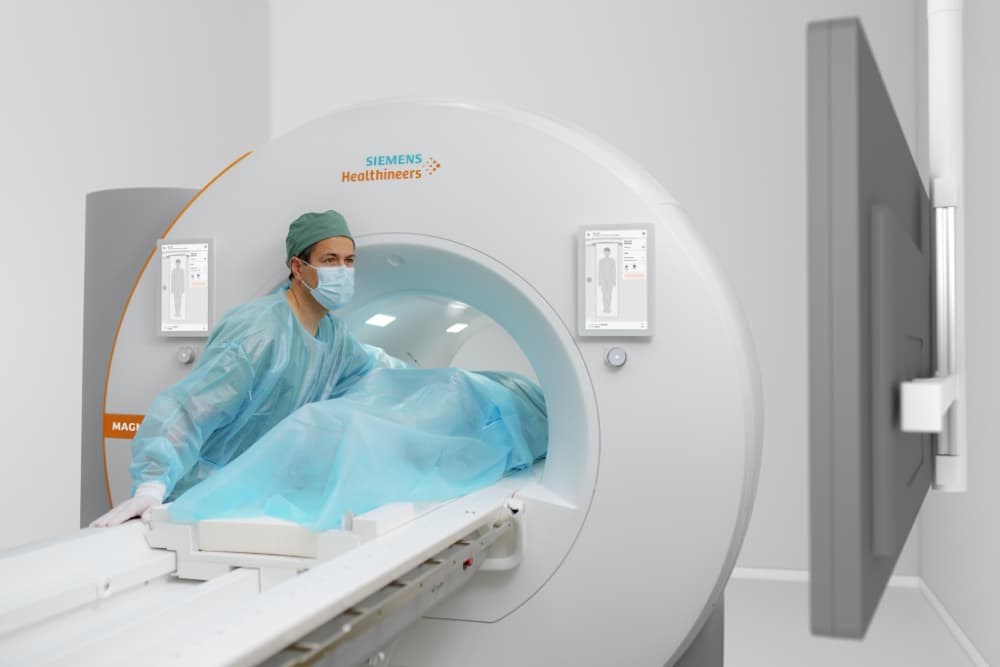
An optionally lifted magnet and the extra-wide 100 cm flared bore opening of Magnetom Free.XL1 are designed to set a new standard for operator access; ergonomic studies suggest potential improvements in endurance and reduced fatigue for interventionalists during procedures.
Helium-independent design and diagnostic versatility
Magnetom Free.XL operates with DryCool technology, requiring only 0.7 litres of liquid helium over the device’s lifetime. This helium-independent design eliminates the need for a quench pipe, allowing more flexible installation in interventional suites. A complete coil portfolio, including form-adaptive contour and interventional coils, is planned to ensure workflow flexibility.
The system supports the full spectrum of diagnostic imaging at 0.55T outside interventional time slots, potentially maximising scanner utilisation. Professor Afshin Gangi from University Hospital Strasbourg commented: “Magnetom Free.XL is poised to become a cornerstone of personalised treatment, not only for interventions, but also in diagnostic scenarios, such as for paediatric, bariatric, claustrophobic or pregnant patients.”
Integrated suite solution
The complete iMRI suite combines Siemens Healthineers’ imaging innovation with Cook Medical’s expertise in interventional therapies and device design. The Nexaris Dockable Table is intended to enable patient transfer across diagnostic, intraoperative, and interventional settings. Free from ionising radiation, iMRI supports real-time imaging and safer workflows for both patients and clinical teams.
The product is under development and not commercially available. Future availability cannot be ensured. Siemens Healthineers presented the system at RSNA 2025 in Chicago.
- For more information, visit: https://www.siemens-healthineers.com/magnetic-resonance-imaging/high-v-mri/magnetom-free-xl